How Often a Portland Roof Needs Moss Treatment and Blow-Offs: Shade, Slope and Tree Cover Street by Street
Moss does not grow evenly across the metro, or even across one roof. It follows shade, moisture and the needle mat, which is why the schedule depends on which way your roof faces and what hangs over it.
Want it handled by a Portland crew? Book roof cleaning and moss removal in Portland
Why moss picks one slope and ignores the other
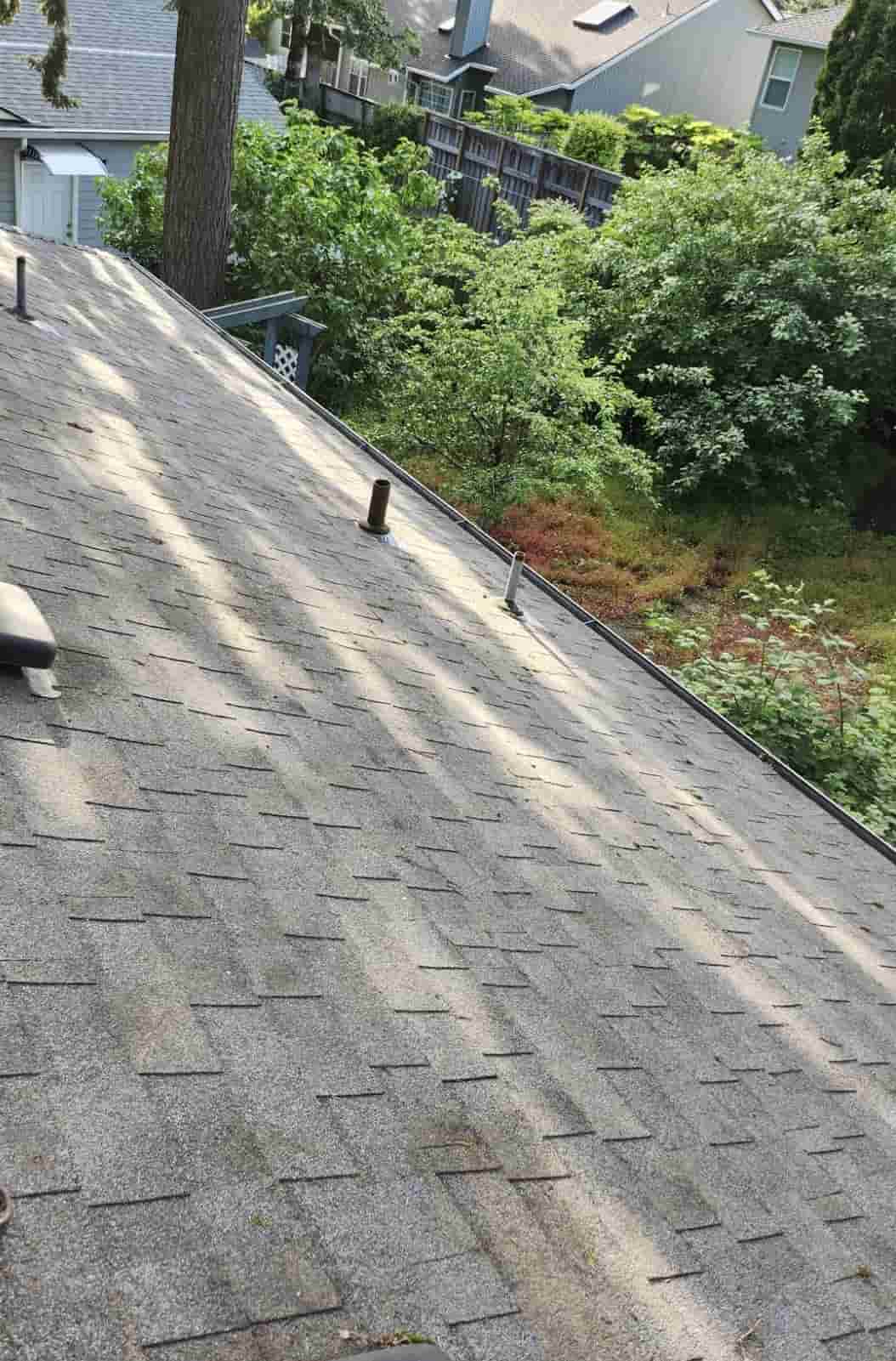
Stand across the street from almost any older house in Milwaukie or Sellwood and you will see it: one roof slope clean, the other striped green. Moss needs two things, shade and standing moisture, and a roof gives it both on the north and east faces, especially where a tree shades the slope and drops the needles that hold water for days after a rain. A south-facing slope in open sun usually dries within hours and tends to stay cleaner on its own.
That is why moss is a question about your roof's geometry and its trees, not about the calendar. Two identical houses can be on completely different schedules because one faces the street and the other faces the firs.
Every two to three years: open sun
A house with a clear southern exposure, young street trees, and no big conifers within a hundred feet is the easy case. Newer neighborhoods in Happy Valley and Clackamas, and the south-facing lots up in Oregon City, often go two or three years between treatments and sometimes longer. Moss starts as a faint green haze on the shaded edge, and treating it at that stage is quick.
Even here, one blow-off after the fall wind is worth it if there is anything nearby that sheds. Needles that sit in the valleys all winter are what turns an open-sun roof into a moss roof over a few seasons.
Once a year: the shaded slope
The most common Portland situation is a roof with one shaded slope: a north-facing back roof, a tree line on the east side, or a hillside lot where the house sits below the neighbors' canopy. West Linn's hillside streets above the river, the Hillsdale and Multnomah Village slopes in SW Portland, and a good share of Lake Oswego fit this. The shaded slope needs treatment about once a year, applied as the wet season begins so it works through the months when moss actually grows.
Pair it with two blow-offs, one after the fall drop and one in late winter. The treatment kills what is there. The blow-offs stop the mat that feeds the next round. Doing one without the other is why some roofs look green again by March.
Every year, plus three blow-offs: under the canopy
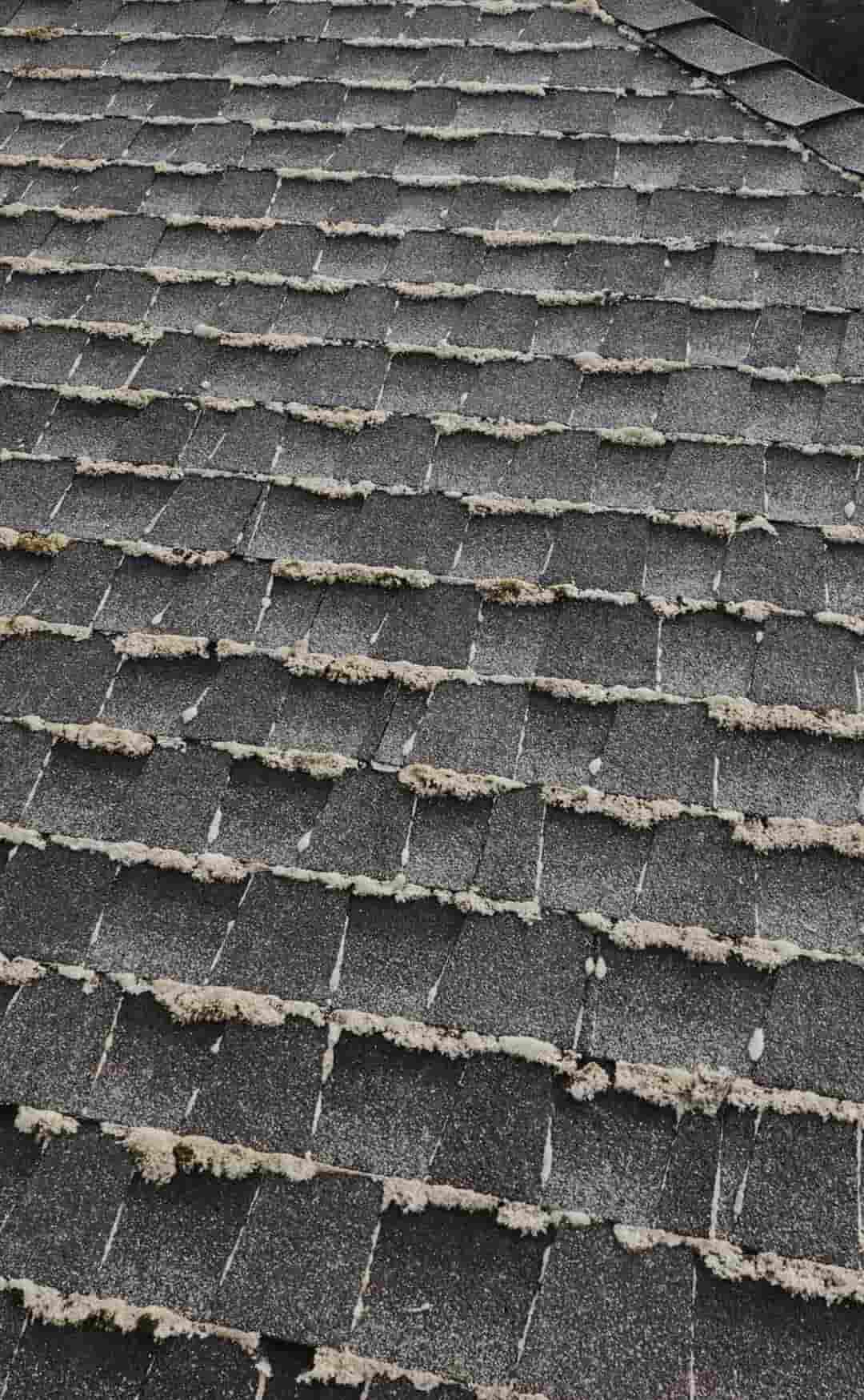
Then there are the roofs that live under the trees: Lake Oswego's Forest Highlands and First Addition, West Linn's Willamette neighborhood, the tall-fir lots in Milwaukie's Ardenwald and Island Station, Eastmoreland, the slopes of Mt. Tabor and Mt. Scott, Oak Grove along River Road. A Douglas fir over the roof sheds every week of the year, and a big-leaf maple can bury a valley in one October storm. Moss here is not a stain. It is a plant with a steady food supply.
The realistic floor is one treatment a year and three blow-offs, roughly October, December and March, with the fall one timed after the main drop. In our experience, that schedule is what gives a composition roof its best chance at a full service life under a canopy. Roofs left under a moss mat for years tend to lose shingles and age faster than their neighbors in the open.
Material decides the method, shade decides the schedule
Composition shingle, the most common roof in the metro, takes a soft treatment applied without pressure. Pressure washing can strip granules and shorten a shingle roof's life, which is why we do not use it on roofs. Cedar shake holds moisture in the grain and needs debris kept off it more than anything. Metal roofs rarely grow moss but trap needles at the seams and behind snow guards. Tile is walked carefully or not at all.
None of that changes how often the roof needs attention. The material changes what we do up there. The shade and the trees change how many times a year we come.
The signs to look for
Green stripes on the shaded slope, moss in the valleys and along the north edge, shingle edges lifting where moss has grown underneath, granules collecting in the gutters below a mossy section, and needles that have turned into a brown mat. Black streaks are usually algae rather than moss, cosmetic on their own but a sign the slope stays wet.
If the moss is thick enough to lift shingles, the first visit is about removing it carefully. The schedule after that is what keeps it from coming back.
Which roof is yours?
Look at the slope that faces away from the sun and at what hangs over it, then pick the closest match. Each option opens the plan builder with that roof schedule already set and measured from your address, so you can see the yearly cost of staying ahead of moss. One-time treatments are welcome too.
Open sun
South-facing, young street trees, no big conifers nearby. A faint green edge at most.
Blow-off once a year; treat every 2 to 3 yearsSee the once-a-year priceOne shaded slope
North or east face in shade, a tree line on one side, or a hillside lot below the neighbors' canopy.
Treatment once a year, plus 2 blow-offsSee the yearly priceUnder the canopy
Firs or maples over the roof. Needles all year and moss in every valley.
Treatment once a year, plus 3 blow-offsSee the full-schedule priceJust need this year's moss dealt with? Request a measured quote and we will price a one-time treatment.
Questions homeowners ask
Is moss treatment safe for a composition shingle roof?
Generally yes, when it is applied as a soft treatment without pressure and matched to the roofing material. The damage people associate with roof cleaning usually comes from pressure washing shingles or scraping them dry, which can strip granules. Treatment plus careful debris removal is the roof-safe path, and we confirm the material before choosing a product.
How long after treatment does the moss disappear?
It dies within a few weeks and then weathers off over the following months of rain. Thick moss is removed gently at the first visit. A light haze is usually left to release on its own rather than scrubbed.
Why does my neighbor's roof stay clean without any of this?
Usually orientation. A south-facing roof in open sun dries fast enough that moss never gets established. Look at which way their main slope faces and what is above it.
Can blow-offs replace treatment?
They slow moss down a lot by removing the needle mat that feeds it, but under real shade they do not stop it. Treatment and blow-offs do different jobs, which is why the canopy schedule uses both.