Gutter Cleaning Under the Trees: Lake Oswego, West Linn, Oak Grove, Milwaukie and SE Portland
The honest schedule is not on a calendar. It is in the trees above your roof, the ones next door, and which way the wind pushes them. Here is how that plays out on real streets around the Portland metro.
Want it handled by a Portland crew? Book gutter cleaning in Portland
What is actually above your roof
Most of what ends up in a Portland gutter falls from one of five trees: Douglas fir, western red cedar, big-leaf maple, red alder, and, along the rivers, black cottonwood. They do not shed on the same schedule. A maple drops nearly everything in a few October weeks, often in a single windy storm. Firs and cedars let go of needles and flat sprays all year, with a heavy push in the fall wind and another in late winter. Alders and cottonwoods add a spring layer of catkins and seed fluff on top of their leaves.
That is why two houses on the same street can need completely different schedules. The lot with a maple in the front yard has a dramatic but short season. The lot under three firs has a slow, constant one that never really stops.
Once a year: open sky, borrowed trees
A surprising number of homes with no branches over the roof still fill their gutters every fall. The trees are next door, across the alley, or uphill, and the wind does the rest. Newer streets in Happy Valley and Clackamas with a greenbelt behind the fence are like this, and so are the older blocks of Milwaukie and Gladstone where the big firs sit in a neighbor's yard rather than your own.
For these homes, one thorough cleaning after leaf drop, usually in November, keeps the drainage path clear through the wet season. The thing to watch is wind direction. If the same two corners overflow every winter, they are downwind of someone's tree, and those corners deserve a look after the first big storm even on a once-a-year house.
Twice a year: partial canopy
A maple in the front yard, a row of firs along one property line, or the edge of an older canopy reaching over one roof slope. This is the most common situation on the established streets of Milwaukie, Oak Grove, and SE Portland neighborhoods like Woodstock and Sellwood-Moreland. One side of the house lives in shade, and its gutters fill first.
These homes usually need a fall cleaning after the main drop and a second visit in late winter or early spring, when the firs shed again and the maple's flowers and seed pods come down. Skipping the second visit is how a spring downpour can end up running behind the fascia instead of down the spout.
Three or more: under the canopy
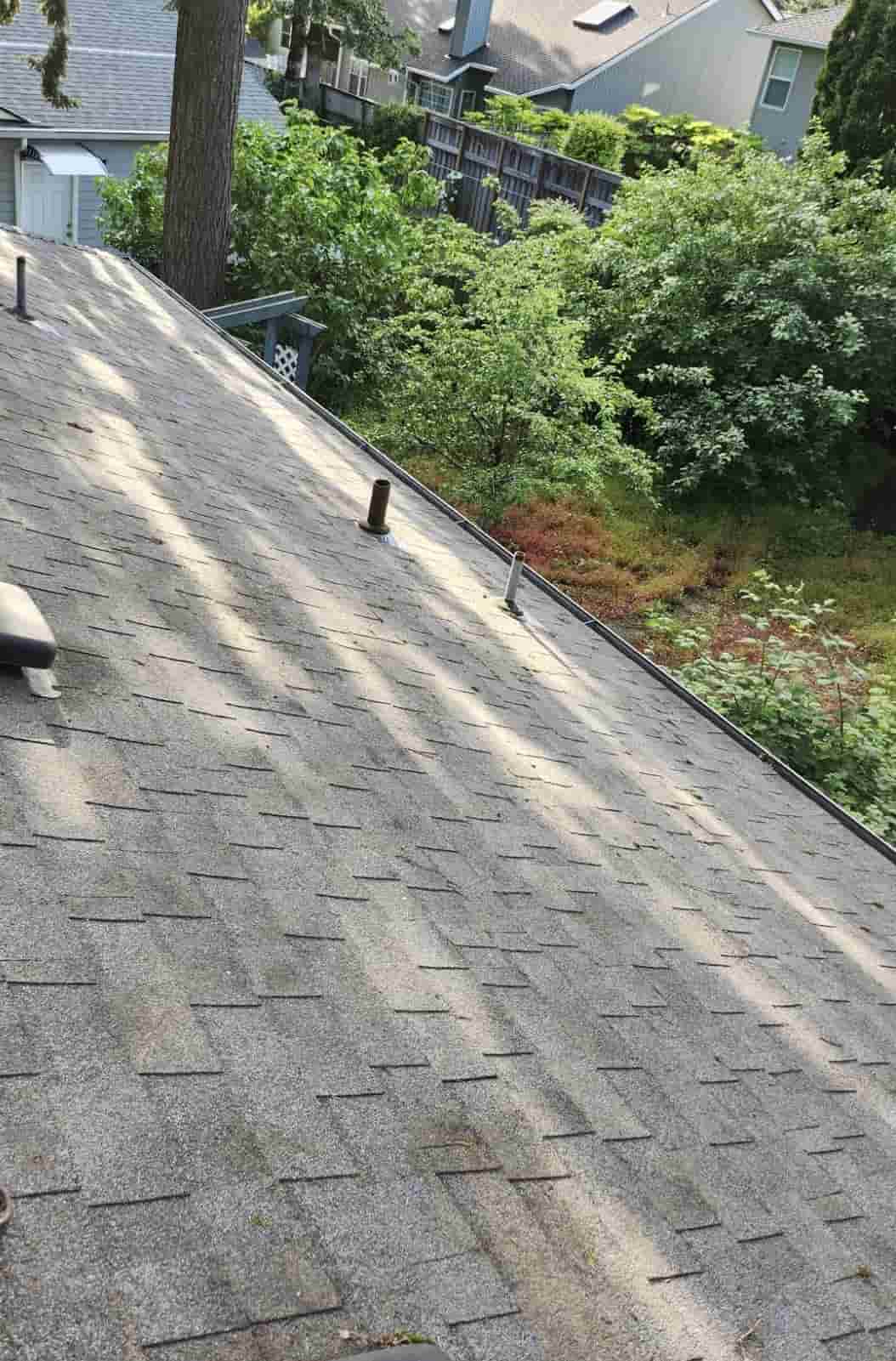
Then there are the streets where the trees are simply older than the houses. Lake Oswego's First Addition and the lanes around Lake Grove and Forest Highlands. West Linn's Willamette neighborhood and the hillside blocks above the river. Oak Grove along River Road. The tall-fir lots in Milwaukie's Ardenwald and Island Station. Eastmoreland and the slopes of Mt. Tabor in Portland. On these lots the canopy is directly over the roof, and a Douglas fir drops needles every single week of the year.
A gutter here can be full again a month after it was cleaned. Three visits a year is realistic, and the gutters are only half the job. Needles that settle on the roof itself compost into a mat that holds water against the shingles. Roof blow-offs between cleanings, especially after the November storms, matter as much as the gutters do.
Where moss comes in
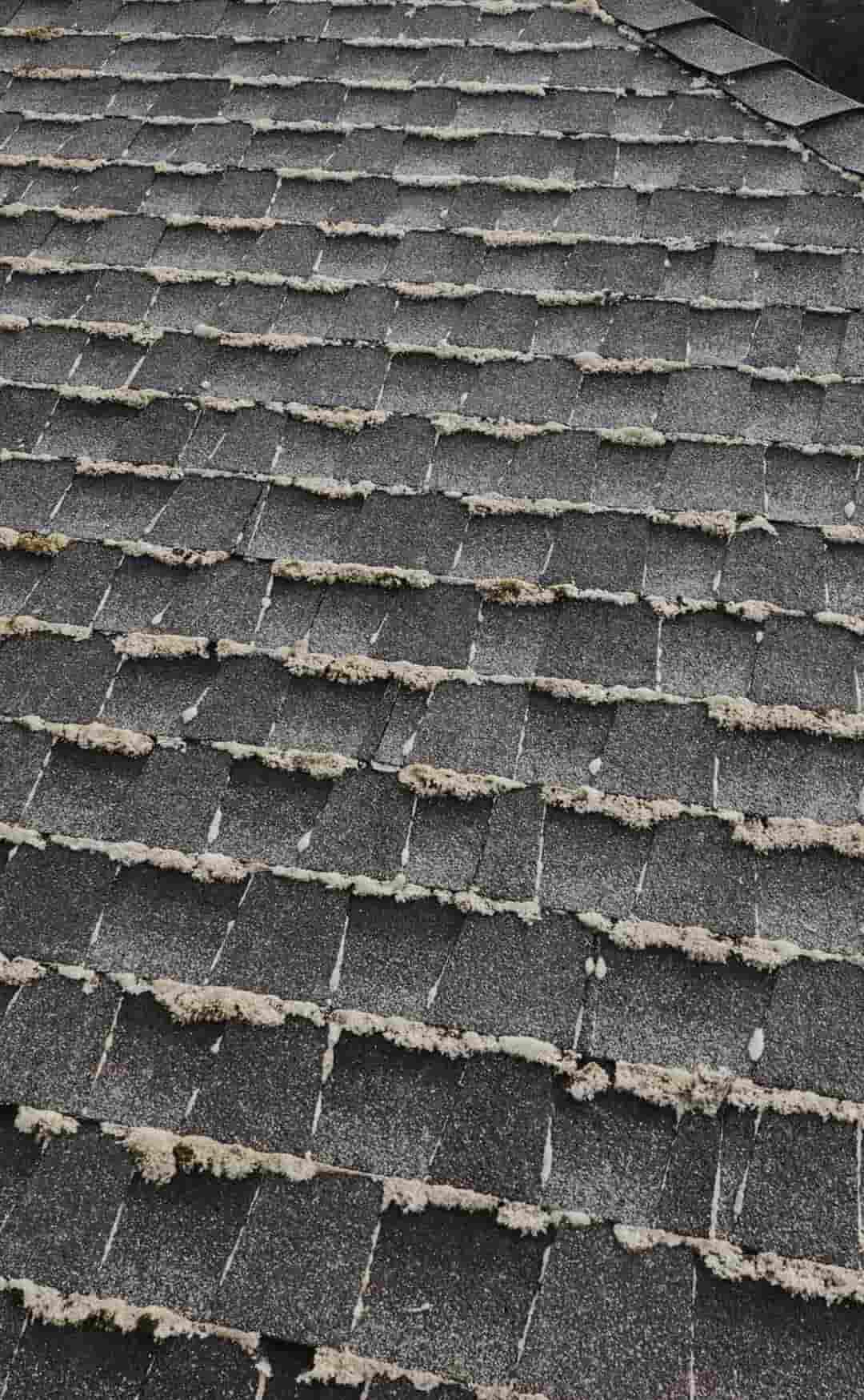
Moss follows the same map as the trees. It needs shade and moisture, and a canopy delivers both: it blocks the sun from the north and east slopes, and it drops the needle mat that keeps those slopes wet for days after a rain. That is why moss shows up in stripes and patches below tree lines rather than evenly across a roof.
On the once-a-year house, moss is usually a slow, minor problem. Under the canopy it is a maintenance item: a treatment applied once the wet season starts, when it works best, and blow-offs that stop the mat from rebuilding. Clearing the gutters without dealing with the roof above them treats the symptom and leaves the cause.
The signs you are on the wrong schedule
Water sheeting over the edge at the corners during a downpour. Dark streaks or peeling paint on the fascia below the gutter. Seedlings, moss, or actual soil in the trough. A downspout that dribbles while the gutter above it is full. Sagging sections where wet debris has been sitting all winter. Any one of these means the current schedule is not keeping up, whatever the calendar says.
The fix is rarely one heroic cleanout. It is matching the number of visits to the trees, and looking at the roof at the same time.
Which one is your house?
Stand in the driveway and look up, then pick the closest match. Each option opens our plan builder with that tree exposure and visit count already set and measured from your address, so you can compare what once, twice, or three times a year actually costs. One-time visits are welcome too.
Open sky, borrowed trees
No branches over the roof, but a neighbor's fir, an uphill lot, or the wind delivers a fall load.
Once a year, after leaf dropSee the once-a-year pricePartial canopy
A maple out front or firs on one side. One roof slope stays shaded and its gutters fill first.
Twice a year: fall, then late winterSee the twice-a-year priceUnder the canopy
Douglas firs or big-leaf maples over the roof. Needles all year, leaves by the bucket in October, moss on the shaded slope.
Three times a year, plus roof blow-offsSee the three-visit priceJust want one fall cleaning? Request a measured quote and we will come out once.
Questions homeowners ask
Do gutter guards solve this under Douglas firs?
They help with maple leaves and slow the fill rate, but fir needles and cedar sprays are small enough to get through or pile up on top of most guards. Guarded gutters under conifers still need checking, and cleaning them takes longer because the guards come off and go back on.
Is there a best month for the fall cleaning?
After the main drop and before the storms settle in, which around Portland usually means the first half of November. Under heavy canopy, an earlier October pass followed by a November cleanup beats waiting for one perfect week.
Does a north-facing roof under trees need moss treatment every year?
Often, yes, at least while the canopy stays. A treatment applied at the start of the wet season plus regular blow-offs keeps moss from re-establishing. Skipping a year usually means starting over.
Can you clean gutters while it is raining?
Light rain is fine and sometimes useful, because you can see exactly where the water is failing to drain. Heavy wind and storms are a different matter for anyone on a ladder, so those days get rescheduled.