Is Moss on Your Roof Bad? What It Actually Does to Shingles in Portland's Climate
Yes, moss on a roof is bad, and in Portland it is bad faster than the internet suggests. Moss holds water against the shingle like a wet sponge, lifts the shingle edges as it thickens, and keeps the roof from ever drying out between storms. A little moss on a north slope is a maintenance item. A mat you can see from the street is a roof aging in fast forward. This guide explains what moss does, how to tell which stage you are at, and what the right response is.
Want it handled by a Portland crew? Book roof cleaning and moss removal in Portland
What moss does to a composition shingle
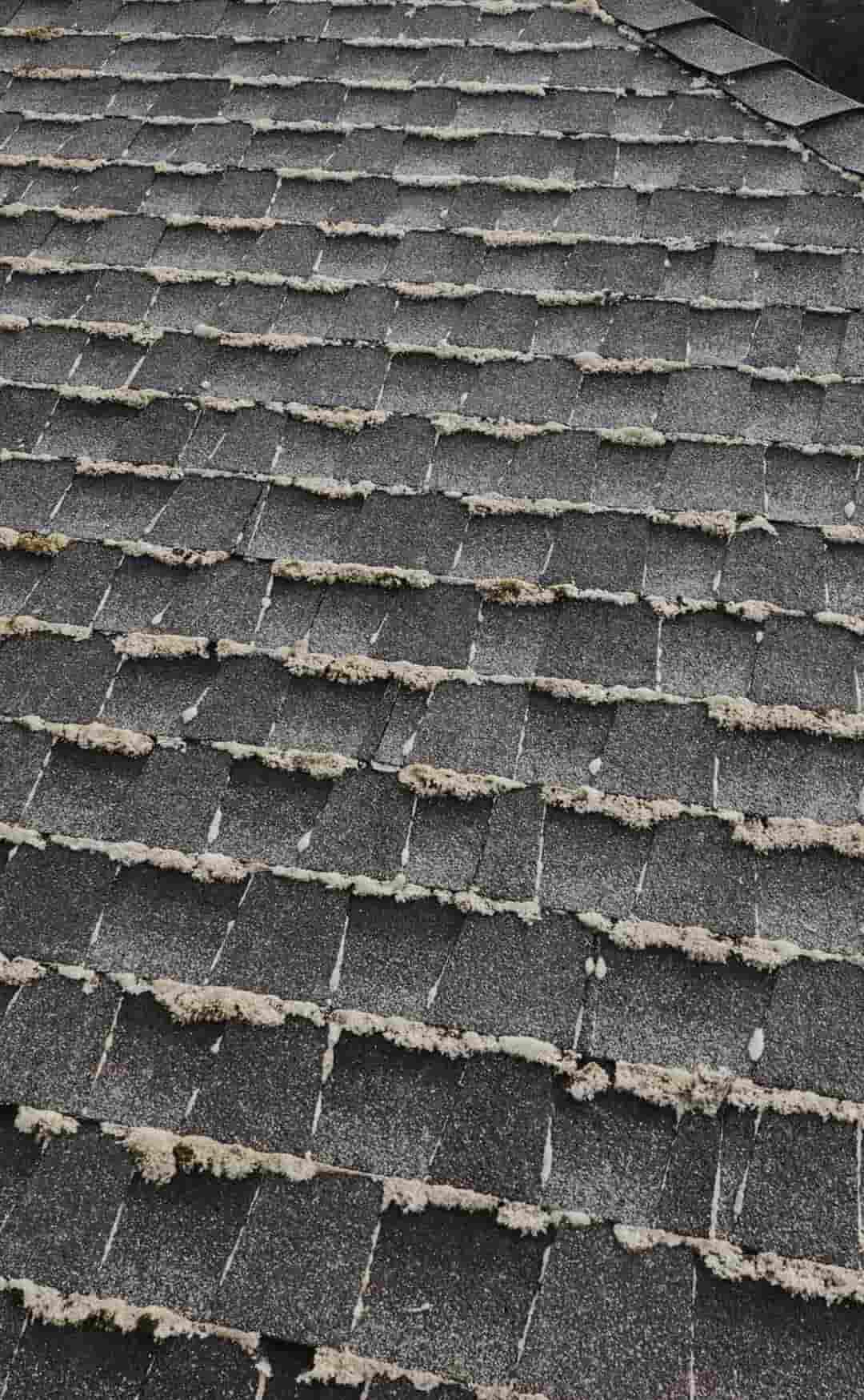
An asphalt composition shingle is a fiberglass mat coated in asphalt and armored with ceramic granules. The granules block ultraviolet light and shed water. Moss undoes both jobs. It grows on the granule layer, holds water against it for days after each rain, and as the mat thickens it pries up the exposed edge of the shingle. Once the edge lifts, wind-driven rain gets under the course above, and the roof starts to leak at the nail line long before it looks bad from the ground.
The second cost is slower. A shingle that stays wet for weeks at a time ages faster than one that dries between storms. The asphalt loses its oils, the shingle goes brittle, and the granules let go. Roofers see it every day: two identical houses on the same street, one with a clean roof at 25 years and one at 15 years with a mat on the north side and bare asphalt showing through.
How fast it happens in Portland
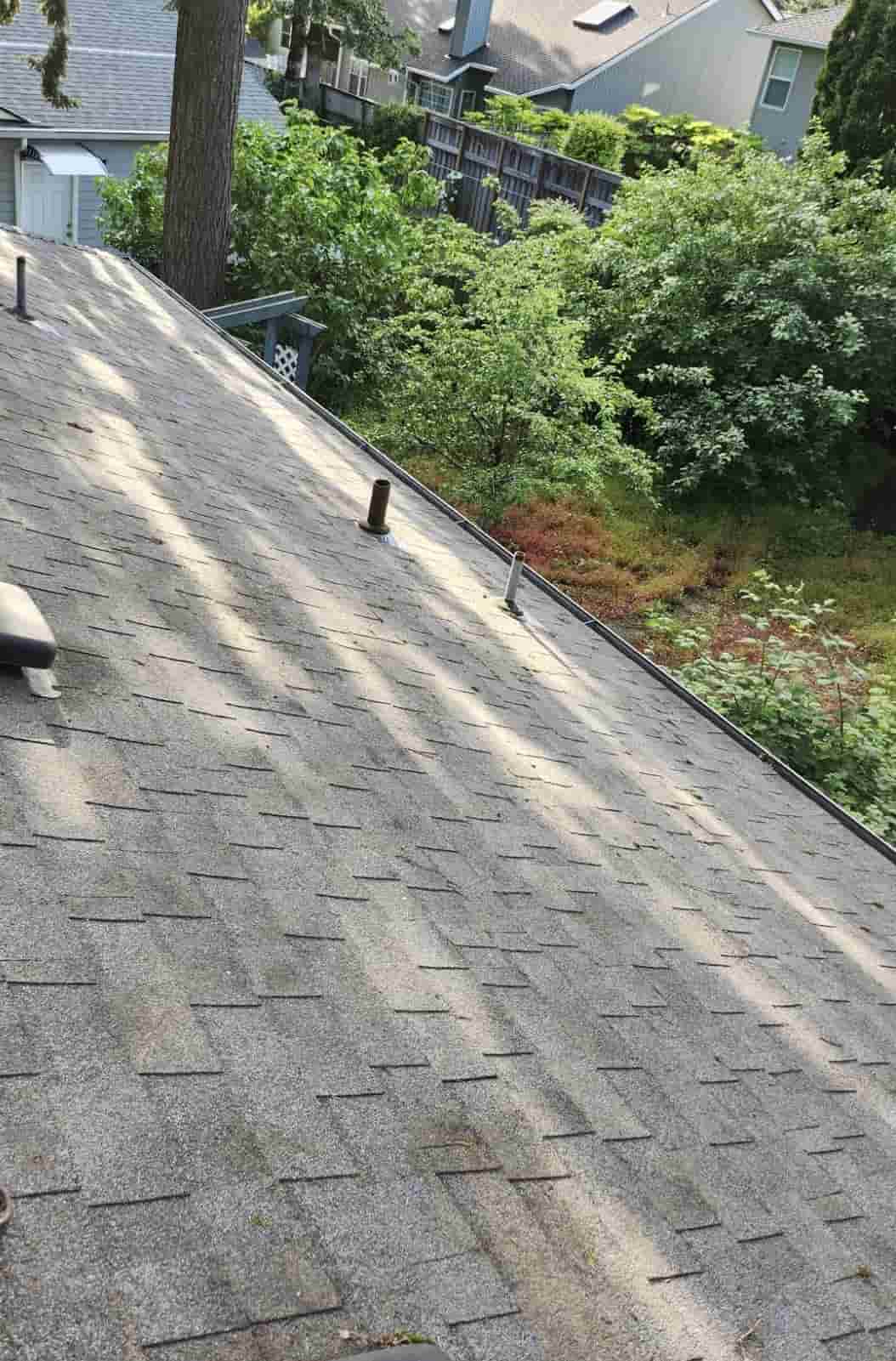
Portland gets most of its roughly 36 inches of rain between October and May, more in the hills, and the shaded side of a roof may not fully dry for months. Add tall Douglas firs dropping needles that trap moisture and shade, and a north-facing slope can go from a green haze to a mat you can see from the street in three to five wet seasons. South-facing roofs in the open often stay nearly clean for a decade. That is why the same house can have one good slope and one bad one.
Cedar shake and tile roofs are not immune. Moss holds water in the shake and speeds rot, and it lifts and shifts tile so water reaches the underlayment. The treatment is different for those materials, but the reason to treat is the same.
The three stages, and what each one needs
Stage one: a green film or scattered small tufts, mostly on the north slope and in the valleys, no lifted edges. This is a treatment-only job. A roof-safe moss treatment applied once, and the moss dies and comes off gradually with the weather. It is the cheapest roof service and the one that keeps the roof cheap.
Stage two: a continuous carpet on the shaded slopes, needles matted into it, some shingle edges lifting at the bottom of the mat. This needs removal first, then treatment. The mat is lifted by hand or with a soft brush, debris is blown off, and then the treatment goes on so what is left dies. Done well, a stage-two roof recovers and goes back to a treatment cadence.
Stage three: mat plus bare asphalt, curled or cracked shingles, granules piled in the gutters, and possibly staining on the ceiling below. Cleaning still helps and buys time, but the honest conversation is about how many years the roof has left. We would rather say that on the driveway than sell a cleaning that cannot change the outcome.
Signs moss has already done damage
Granules collecting at the downspout outlets and in the gutters. Shingle edges that look wavy or lifted from the ground. Dark streaks below the moss line where water has been running under the course. Daylight or damp spots in the attic on the north side. Any of these is a reason to have the roof looked at before the next wet season, not after it.
What not to do
Do not pressure wash a shingle roof. It removes the moss and the granules together, and a roof that has been pressure washed twice is often a roof that needs replacing early. Do not scrape dry moss with a stiff brush or a shovel for the same reason. Do not pour bleach straight from the jug down the slope; it runs into the gutters and onto the plants below, and it does not reach the roots of an established mat. The method that works is a roof-safe treatment applied to the whole surface, removal by hand only where the mat is thick, and then patience while the weather does the rest.
Which stage is your roof?
Pick the closest match. Each option opens the plan builder measured from your address, or sends the address for a one-time quote.
Green film, no lifted edges
Stage one. Treatment only, on a cadence that keeps it there.
Every 2 to 3 yearsPrice the treatmentCarpet on the shaded slope
Stage two. Removal by hand, then treatment, then a yearly cadence under trees.
Yearly plus blow-offsPrice the yearly planMat plus bare asphalt
Stage three. We look before we quote and tell you what the roof has left.
Measured one-time quoteGet a measured quoteWant the whole house priced at once? Build my plan from my address and every service shows its own visit count and monthly number.
Questions homeowners ask
Is moss on a roof bad?
Yes. Moss holds water against the shingles, lifts the shingle edges as it thickens, and shortens the life of the roof. A light film is a maintenance item; a mat is active damage.
Does moss damage roof shingles?
It does, in two ways: it keeps them wet so they age faster, and its mat lifts the edges so water gets under the course above. Scraping or pressure washing to remove it adds a third kind of damage, granule loss.
How long can moss sit on a roof before it matters?
In Portland, a north slope can go from clean to matted in three to five wet seasons. A film caught in the first year or two is a treatment; after that it is a removal.
Will the moss come back after treatment?
Eventually, because the shade and moisture that grew it are still there. Treated every two to three years, or yearly under heavy tree cover, it never gets back to a mat.
Can I just leave it and replace the roof later?
You can, but the roof gets replaced sooner. Treatment every few years costs a fraction of the years it adds to a roof under trees.