Roof Blow-Off in Portland: Getting Fir Needles, Leaves and Roof Debris Off Before They Turn Into Moss
A roof blow-off is the Northwest name for clearing a roof of fir needles, leaves, cones and grit with a blower before the debris composts into a moss bed. Portland roofs under Douglas fir and bigleaf maple need one every fall and often one more in March. It is the single cheapest thing you can do for a roof here, because moss does not start on clean shingles; it starts in the needle mat that holds water in the valleys, behind the chimney and along the north eave. This page explains what the service is, how we do it safely, when to book it, and what it costs on its own and with the gutters.
Roof under the trees and it is October? See roof and moss care in Portland: blow-off, treatment and what it costs
What a roof blow-off is (and is not)
Search for roof blow-off and Google mostly shows houses that lost a roof in a windstorm. In Portland, Seattle and Eugene the phrase means something routine: a crew clears the roof of needles, leaves, cones, seed pods and shingle grit with a backpack blower, then cleans the gutters that catch what came down. It is the same idea as raking the lawn, on the surface that costs the most to replace.
It is not roof cleaning in the sense of washing, and it is not moss treatment. Moss that is already growing is handled with a roof-safe treatment applied after the debris is gone. A blow-off is the step that keeps a treated roof clean and stops a clean roof from needing treatment in the first place.
Why Portland roofs need one every fall
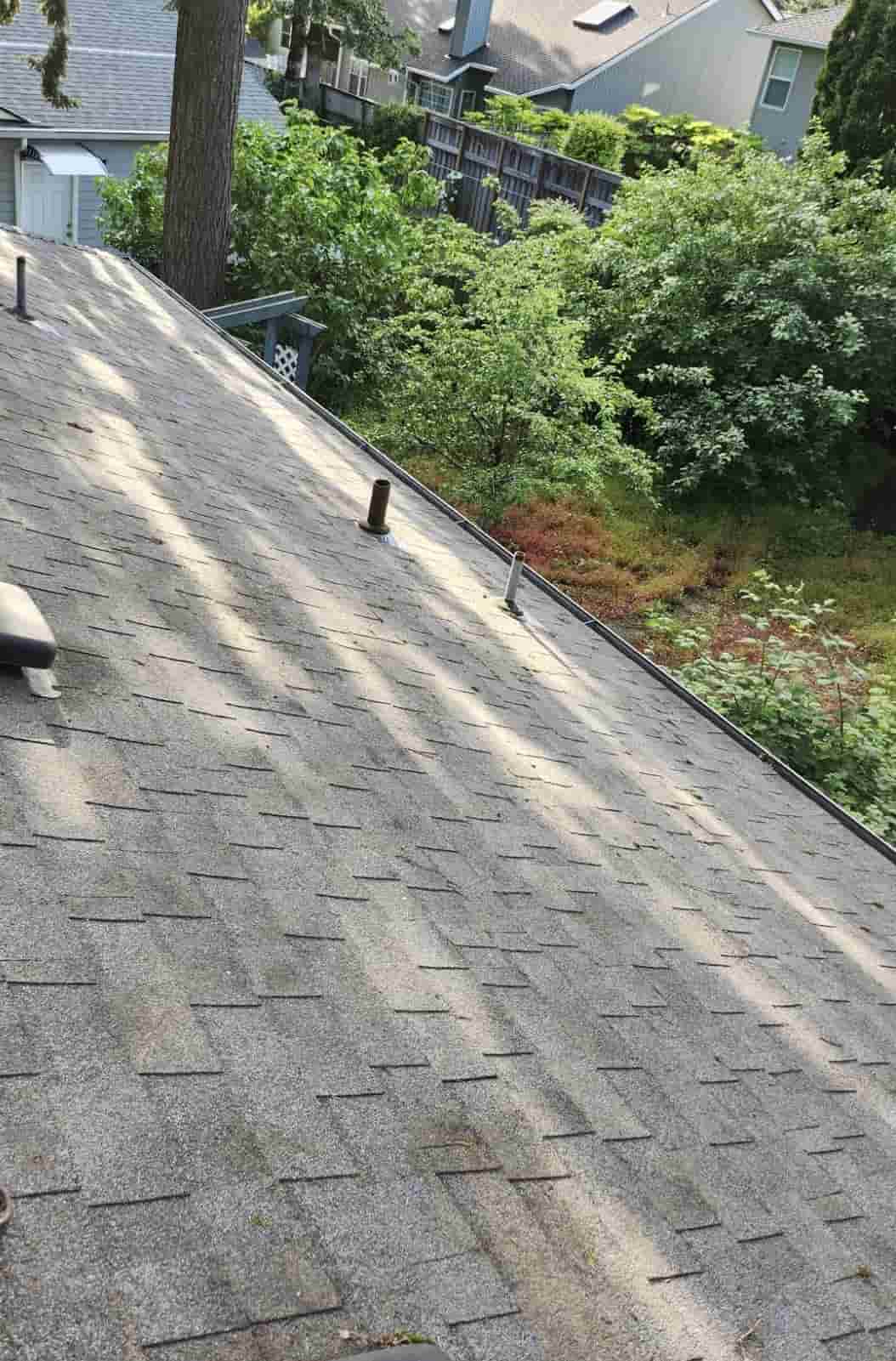
A Douglas fir drops needles year-round and dumps them after every east wind; bigleaf maples drop their leaves in a two-week rush in late October; cedars shed fine scale that turns to silt. On a roof, that mix does not blow away. It collects where the water slows: the valleys, the uphill side of chimneys and skylights, the strip along the north eave that never sees sun, and under any limb that hangs within a crown of the roof.
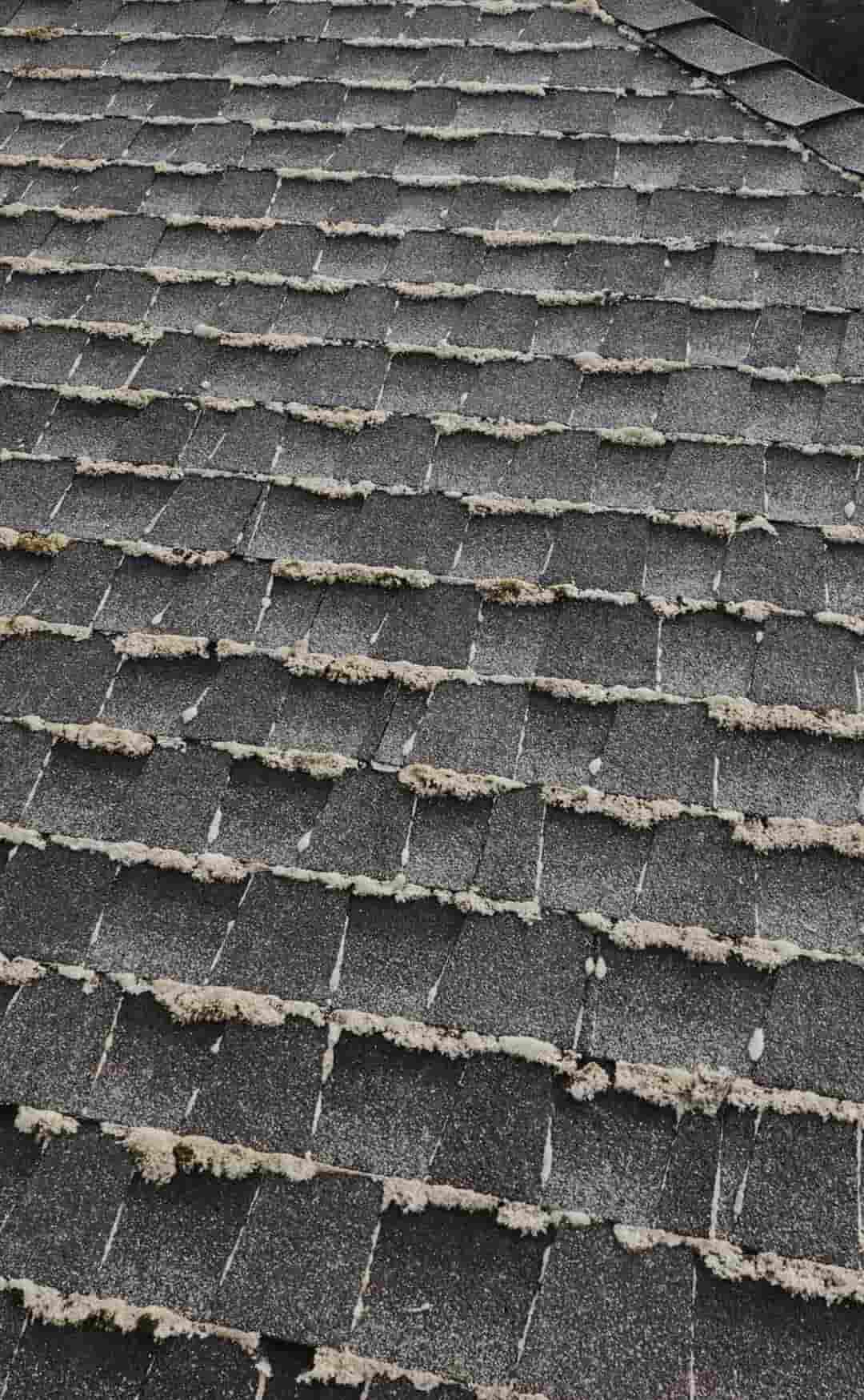
Within one wet season the mat is compost. It holds water against the shingles, blocks the valley so rain runs sideways under the laps, and gives moss exactly the damp, shaded, nutrient-rich bed it wants. By spring there are green ridges along every shingle edge under the tree. That sequence is why the cheapest roof maintenance in Portland is a blower in November, and why the expensive one is moss removal three years later.
How it is done without damaging the roof
On a walkable pitch in dry conditions we work from the roof with a backpack blower, starting at the ridge and working down-slope so debris moves with the shingle laps, never against them. Valleys and the uphill side of every penetration are cleared by hand where the mat is packed. Debris goes off the eave onto tarps or the ground, not into the gutter, so the gutter cleaning that follows is a real cleaning and not a second pass through the same needles.
On steep roofs, wet roofs, and any roof with an established moss bed, nobody walks on it. Those are cleared from ladders and the eave with an extended blower wand, and the work stops where it cannot be reached safely; we tell you which section that was. Tile, metal and cedar shake each get a lighter touch: no walking on tile, no blowing up under standing-seam laps, and shake is cleared in the direction of the grain.
We do not pressure wash shingles, ever. High pressure strips the granules that protect the asphalt and takes years off a roof to make it look clean for a season. If a wash is the right answer, it is a low-pressure soft wash on a roof that can take it, and that is a separate conversation from a blow-off.
When to schedule it
The first window is late October into mid-November, after the maples have dropped and before the November atmospheric rivers arrive. Doing it in early October on a maple-shaded roof means doing it again in three weeks. The second window is March, once the firs have finished their winter shedding and before the spring moss flush. Roofs under dense conifer canopy, common in Lake Grove, West Linn, Oregon City and the wooded parts of Milwaukie and Happy Valley, benefit from both. Roofs in open sun usually need only the fall pass.
After a big windstorm is the third time to call. A single storm can put a winter's worth of needles and small limbs onto a roof, and the valleys block within days if it is left.
What a roof blow-off costs in Portland
A simpler single-story roof with light debris starts around $350. The price rises with roof square footage, pitch, stories, the amount of debris, and how much has to be done by hand around chimneys, skylights and valleys. Larger two-story roofs under heavy canopy run higher, and a roof that already has moss usually gets quoted as blow-off plus treatment so you see both numbers separately.
Most Portland homes book it with gutter cleaning, which is the right order: roof first, gutters second, downspouts flushed last. The bundle is priced from the measured roof and gutter run at the address and confirmed with you before it goes on the calendar. If the roof turns out to be unsafe to clear fully on the day, you pay for the section that was done, and we tell you why the rest was not.
Blow-off, gutters, treatment: the right order
Roof first, gutters second, downspouts last. Treatment only if there is moss to treat.
Fall blow-off with gutters
Roof cleared, valleys and penetrations done by hand, gutters cleaned and downspouts flushed in one visit.
From about $350 for the roof, gutters priced with itPrice my roof and guttersFall and March
The conifer-canopy schedule: two blow-offs a year so the valleys never hold a winter of needles.
Two visits, one fixed pricePrice both visitsBlow-off plus moss treatment
For a roof that already has green ridges: clear the debris, then a roof-safe treatment while the wet season does the work.
Quoted as two lines from the measured roofRead how treatment worksQuestions homeowners ask
What is a roof blow-off?
Clearing fir needles, leaves, cones and grit off a roof with a blower, by hand in the valleys and around chimneys and skylights, before the debris composts into a moss bed. Gutters are cleaned in the same visit. It is routine maintenance, not storm repair.
How much does a roof blow-off cost in Portland?
From about $350 for a simpler single-story roof, rising with square footage, pitch, stories and debris load. Bundled with gutter cleaning it is the standard fall visit and is priced from the measured roof and gutters at the address.
Does a roof blow-off remove moss?
No. It removes the debris moss grows in and knocks loose growth off, but established moss needs a roof-safe treatment after the debris is gone. We quote the two separately so you can see each.
When should I get my roof blown off?
Late October into mid-November after the main leaf drop, and again in March under heavy fir canopy. After a big windstorm is the third time.
Is it safe to walk on my roof to do this?
On a dry, walkable pitch, yes, with the right footwear and technique. Steep, wet or mossy roofs are cleared from ladders and the eave, and the work stops where it cannot be reached safely. We never walk on tile or wet moss.
Do you pressure wash roofs?
No. Pressure washing strips the granules off asphalt shingles. A blow-off clears debris; if a roof needs washing, it is a low-pressure soft wash on a roof that can take it, and that is a separate service.